

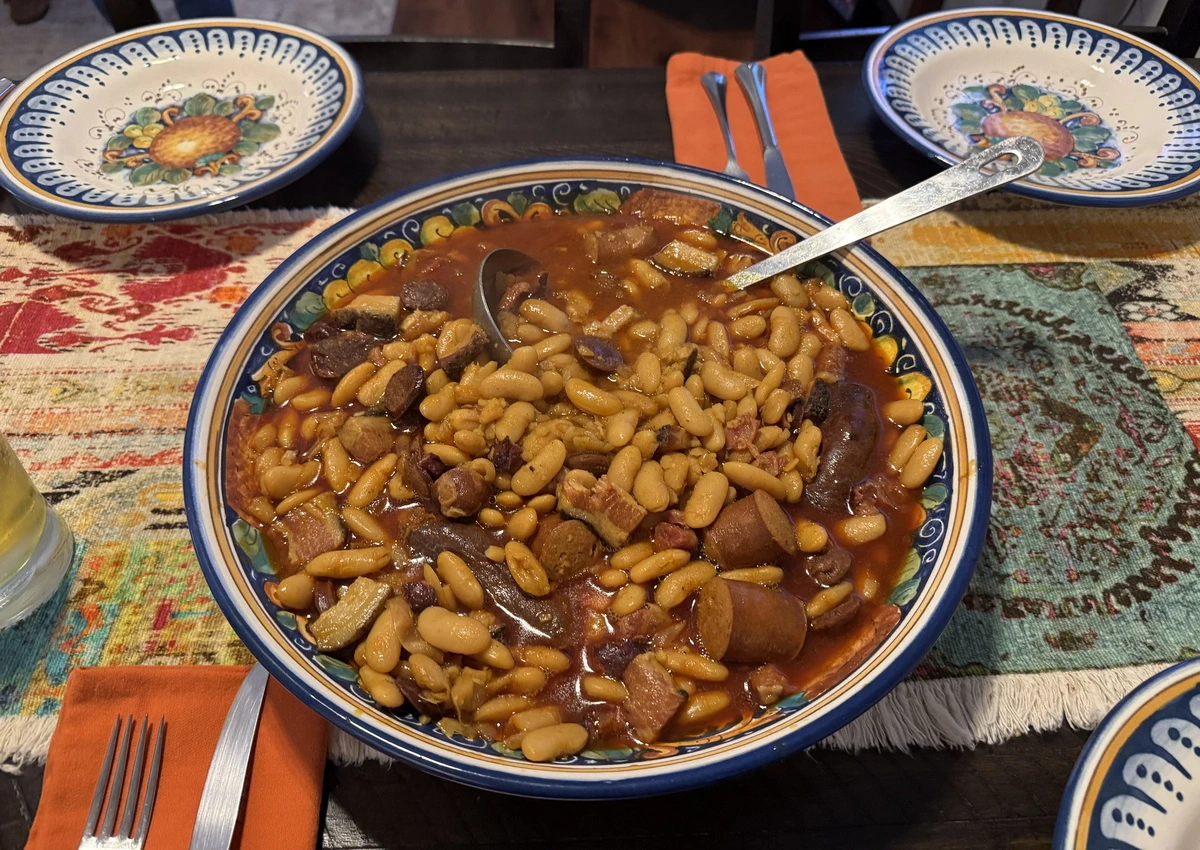
España… I guess this could have been “E” – but I am doing the English version of the place-names. Our current political climate has me wishing I was younger, spoke other languages, and had dual citizenship somewhere, but being old and having my own little slice of cyberspace means I can at least highlight and commend the rest of the world – the people who our current administration are hellbent on vilifying.
Let’s face it – American Cuisine is nothing more than transformed foods brought here by immigrants. American as Apple Pie?!? British and other European pie traditions. Fried Chicken?!? African and European frying techniques. And don’t even get me started on pizza and Taco Tuesday…
Tonight’s dinner has Sidra, rice, beans, saffron, paprika, and sausages from Spain, but the flour for the bread was US grown, as was the chicken broth, onion, garlic… The butter is from Ireland, water from the Tualatin River, olive oil from Sicily… a mash-up of what I have always thought the US was supposed to be about – ingredients from all over the world blended together to make a really great dish. “You may say I’m a dreamer, but I’m not the only one”
I chose Spain over other really good “S” options because we have friends who live in Asturias – Northern Spain. We’ve shared food and ideas for years, so it was fitting to pay homage to friends and a country that is fighting the good fight.
We started off with a simple appetizer – that I did not get a photo of… slices of Manchego cheese and Chorizo a La Sidra (Spanish Chorizo in Cider). A very simple recipe with lots of flavor.
Chorizo a La Sidra
From Caroline’s Cooking
- 3 ½ oz fresh chorizo or semi-curado
- 1 teaspoon olive oil
- ½ cup Asturian cider or other dry hard cider (see notes)
- 1 bay leaf
- 1 teaspoon parsley chopped, approx, to serve
Cut the chorizo into even slices (around ¼in/3mm thick or a little more).
Warm the oil in a small skillet/frying pan over a medium heat and add the slices of chorizo in a single layer. Cook for around 3-4 minutes until starting to crisp then turn over. Note if you have fully cured chorizo, don’t crisp it, just warm gently so the oils flow but no more.
Cook for a couple minutes on the other side then add the cider to the pan. Tuck the bay leaf in between or under the chorizo slices.
Once the cider comes to the boil, reduce the heat slightly and simmer for around 15-20 minutes until the cider has reduced by about half and become slightly more syrup-like. Turn the chorizo now and then as it is cooking. Remove from the heat and serve either in the skillet or a terracotta dish, topped with a little chopped parsley.
Since I love to bake, I always look for a bread recipe. I must (shamefully) admit that I have no idea the source of this particular bread. I was doing so many internet searches at one point that I copied it and then closed the tab before realizing I had no idea where it came from. I have tried searching to no avail. if there are any folks out there who can figure it out, let me know.
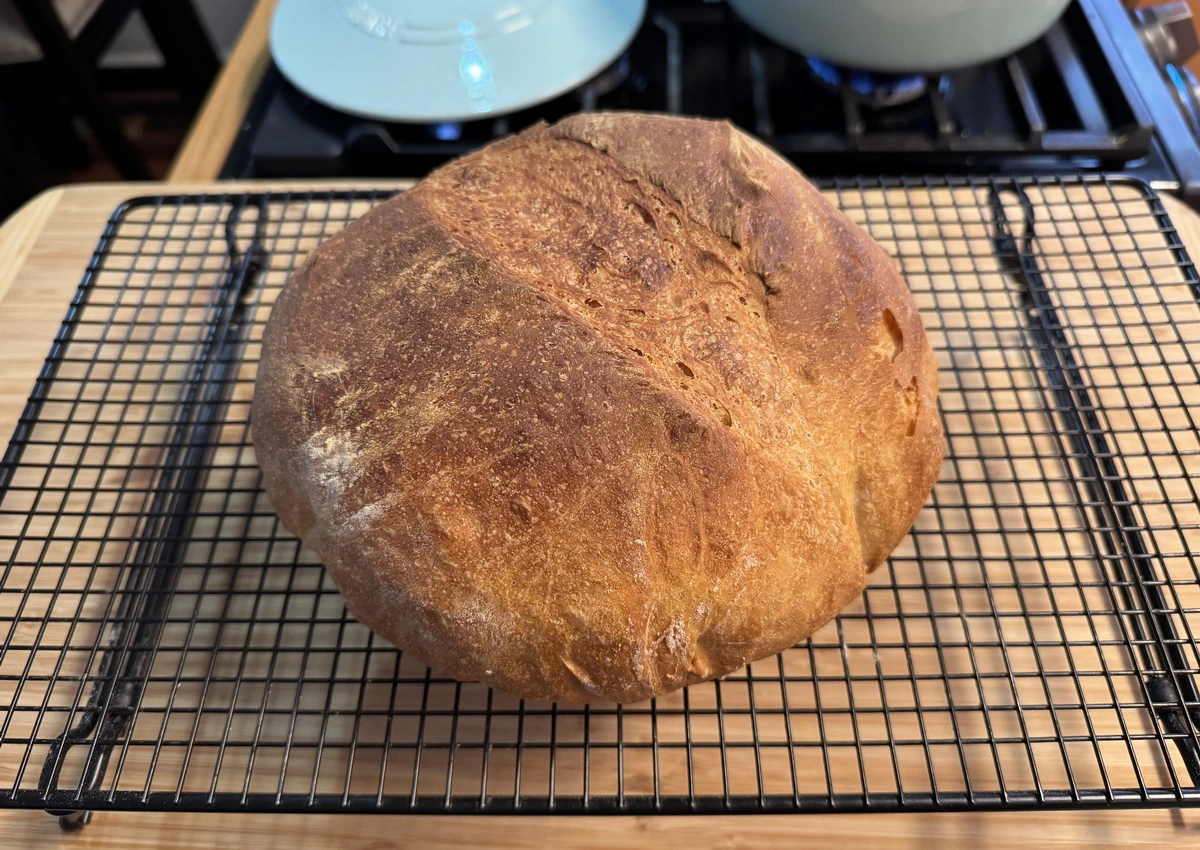
Crusty Asturian-Style Bread
- 500 g bread flour (about 4 cups, spooned and leveled)
- 350 g water (1½ cups minus 1 Tbsp), room temperature
- 10 g fine sea salt (about 1¾ tsp)
- 5 g instant yeast (about 1½ tsp)
- 10 g extra-virgin olive oil (about 2 tsp), optional
For a slightly more rustic Asturian character, replace 50 g of the bread flour with whole-wheat flour.
Make the dough
Combine the flour, yeast, and water in a large bowl.
Mix until there are no dry patches. The dough will be sticky and somewhat shaggy.
Cover and let it rest for 20 minutes.
Add the salt and olive oil, if using. Work the dough by hand for 3–4 minutes, folding and squeezing it until the salt is incorporated and the dough begins to become smoother.
Don’t add lots of extra flour. A relatively wet dough produces a better crust.First rise
Cover the bowl and leave at room temperature for approximately 1½–2 hours, until the dough has increased by roughly 50–75%.
After the first 30 minutes, give the dough one set of folds:
Wet your hand.
Grab one side of the dough.
Stretch it upward.
Fold it over the center.
Rotate the bowl and repeat 3–4 times.
Cover and leave it alone for the remainder of the rise.Shape
Turn the dough onto a lightly floured counter.
Gently form it into a round, taking care not to completely deflate it.
Pull the edges underneath to create surface tension.
Place it seam-side down on a piece of parchment paper or in a well-floured proofing basket.
Cover with a clean towel.Final proof
Let it rise for 45–60 minutes.
It should look noticeably puffy but shouldn’t necessarily double.
While it proofs, put a Dutch oven or heavy covered pot into the oven and preheat to:
475°F / 245°C
Allow the pot to heat for at least 30 minutes.Score and bake
Carefully transfer the dough into the hot Dutch oven.
Using a very sharp knife or bread lame, make one decisive slash about ½ inch deep across the top.
Cover immediately.Bake:
20 minutes covered at 475°F / 245°C
Remove the lid
Reduce to 450°F / 230°C
Bake another 20–25 minutes
The loaf should be deeply browned and have a hard, crisp crust.
For an especially crisp crust, turn off the oven, crack the door open, and leave the loaf inside for 5–10 minutes.Cool
Transfer the bread to a rack.
Wait at least 45 minutes before cutting it.
This matters more than it seems—the crumb continues setting as it cools.
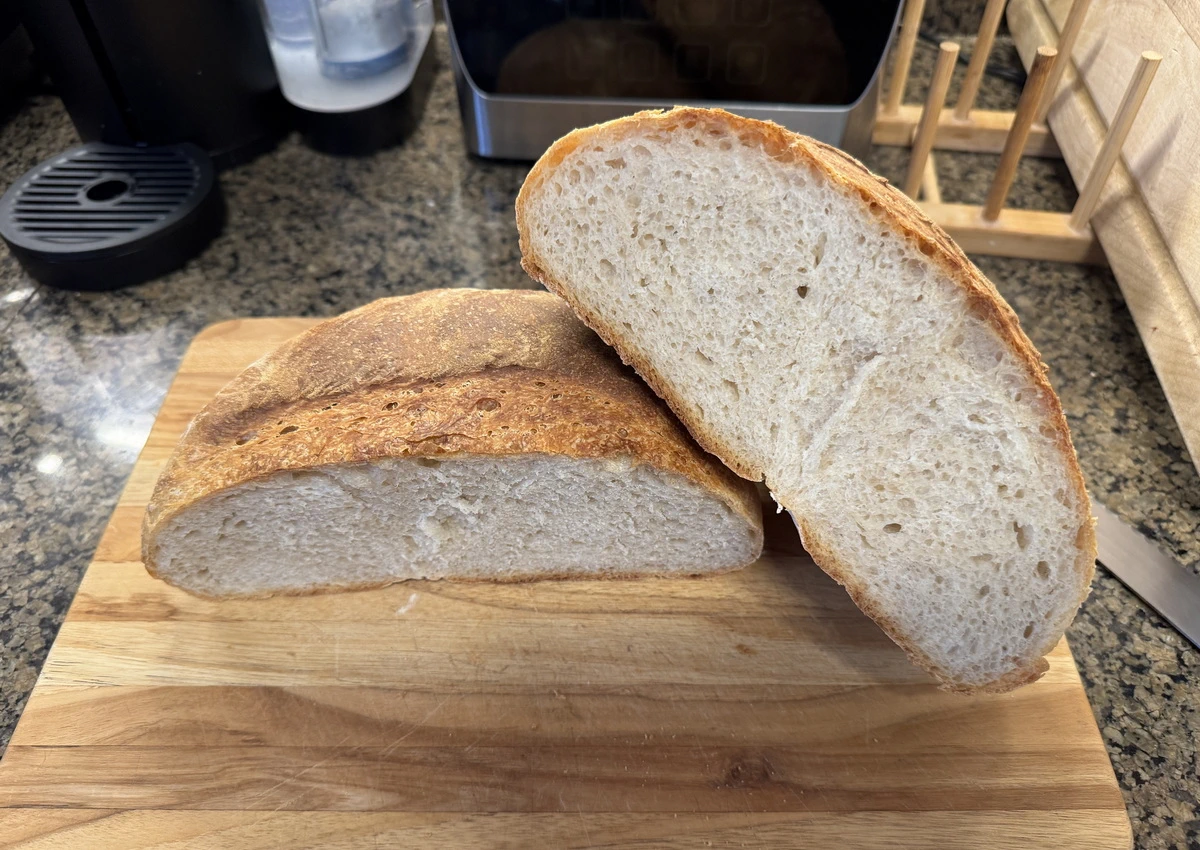
I don’t know how Spanish it is, but it was a really good loaf of bread! Good crunch and lots of flavor. It went perfectly with the beans! I did use 50 g of white whole wheat flour…
And speaking of beans… who knew beans could taste so good?!?
I cheated big-time with this recipe. I found easily a dozen Fabada Asturiana recipes that were pretty similar but all had their own tweak to them. Since they all sounded good, I took five of them, loaded them into ChatGPT and told it to make me a recipe based on them. It did. And it did not disappoint.
Fabada Asturiana
- 1 lb (450 g) dried fabes, preferably Asturian fabes
- 2 Asturian chorizos, about 6–8 oz / 170–225 g total
- 1 Asturian morcilla, about 4–5 oz / 115–140 g
- 6–8 oz (170–225 g) panceta or thick-cut slab bacon, preferably cured
- 1 small ham hock or 6 oz / 170 g cured pork shoulder, optional but highly recommended
- 1 medium yellow onion, peeled and left whole
- 4 garlic cloves, lightly crushed but left in their skins
- 1 bay leaf
- 1 tbsp sweet Spanish pimentón (not smoked)
- ½ tsp saffron threads, lightly crushed
- 2 Tbsp good Spanish extra-virgin olive oil
- 3–4 cups chicken stock, preferably low-sodium
- 2–3 cups water, plus more as needed
- Salt, only as needed
The night before
Put the fabes in a large bowl or pot and cover with at least 3 inches of cold water. Leave them to soak for 10–12 hours.
The next day, drain and rinse them gently.Prepare the meats
Put the chorizo, morcilla, and panceta in a saucepan and cover with cold water.
Bring to a gentle boil and cook for 5 minutes.
Remove the meats and discard the water. This removes some excess fat and prevents the finished fabada from becoming unnecessarily greasy.
If using a ham hock, you can either add it directly to the fabes or simmer it separately for about 30–45 minutes first.Start the fabes
Put the drained fabes in a large heavy pot or Dutch oven.
Add:
the onion
garlic
bay leaf
panceta
ham hock, if using
2 Tbsp olive oil
Add approximately 3 cups chicken stock plus 1½ cups water, or enough liquid to cover the beans by about 1 inch.
Bring slowly to a boil.
As soon as the liquid boils, reduce the heat to very low. Skim away any foam that rises to the surface. The beans should cook at a bare simmer, never a vigorous boil.Add the saffron and pimentón
While the beans are coming up to temperature, lightly toast the saffron threads in a dry skillet over low heat for 20–30 seconds. Do not let them brown.
Crush them lightly between your fingers or with the back of a spoon.
After the fabes have been simmering for about 20 minutes, add:
½ tsp saffron
1 tsp sweet pimentón
For the pimentón, mix it with a small ladleful of the hot cooking liquid before adding it to the pot. This distributes it without needing to stir the beans aggressively.
Add the chorizo at this point.Add the morcilla later if it is soft or prone to breaking apart; if yours is a firm Asturian-style morcilla, it can go in now.Cook very gently
Continue cooking for approximately 2–2½ hours, depending on the age and variety of your fabes.
Do not stir with a spoon.
Instead, every 20–30 minutes, gently shake or rock the pot from side to side. This helps release starch from the beans and naturally thickens the broth while keeping the fabes intact.
The beans must remain submerged. If the liquid level drops too far, add hot water or warm chicken stock, a little at a time.
Do not add large quantities of cold water repeatedly. Some traditional recipes call for this, but maintaining a steady, gentle cooking temperature gives you more predictable results.Add the morcilla
If your morcilla is soft, add it during the last 30–40 minutes of cooking. If it is very delicate, cook it separately and add it to the finished fabada just before serving. The goal is for the morcilla to flavor the broth without disintegrating completely into it.
Know when it is done
The fabes are ready when they are:
completely tender
creamy inside
still largely intact
surrounded by a thick, silky broth
Taste one bean rather than judging solely by cooking time.
If the broth is too thin, remove about ½ cup of beans with some liquid, mash them into a smooth paste, and stir that back into the pot by gently shaking the pot.
Taste and adjust salt only at the end. The chorizo, morcilla, panceta, ham, and stock can contribute a substantial amount of salt.Rest the fabada
Turn off the heat and let the fabada rest for at least 30 minutes, preferably 45–60 minutes.
This is important. The broth thickens, the beans absorb the flavors, and the whole dish becomes considerably more cohesive.
If necessary, gently rewarm it before serving. Do not boil it hard.Serve
Remove the onion, garlic, and bay leaf.
Remove the meats and slice:
chorizo into thick rounds
morcilla into thick rounds
panceta into bite-sized pieces
ham, if using, into chunks
Spoon the fabes and broth into wide, shallow bowls and arrange the meats on top.
Serve immediately with crusty bread if desired.A few important choices
Saffron: I prefer ½ teaspoon here rather than the smaller pinch in the first recipe. With 450 g of fabes, that gives the saffron enough presence to be noticeable without overwhelming the pork and beans.
Pimentón: Use sweet, non-smoked pimentón. Fabada should get its smoky character primarily from the cured meats rather than from smoked paprika.
Olive oil: You don’t need the enormous quantities in some of the recipes. The cured pork supplies plenty of fat. Two tablespoons gives the broth richness without making it oily.
Chicken stock: Use it, but don’t make the dish entirely stock-based. A roughly 2:1 stock-to-water starting ratio keeps the stock from overpowering the beans and pork.
No stirring: This is probably the most important technique. Stirring can break the fabes apart. Gently shake the pot instead.
Make it the day before if possible: Fabada is arguably better after resting overnight. Cool it promptly after cooking, refrigerate, and reheat very gently the next day. Add a splash of water or stock if the broth has become too thick.
You can tell the instructions were written by a machine – and I did not really follow them very closely. I was much more interested in the ingredient list. But it worked very well!
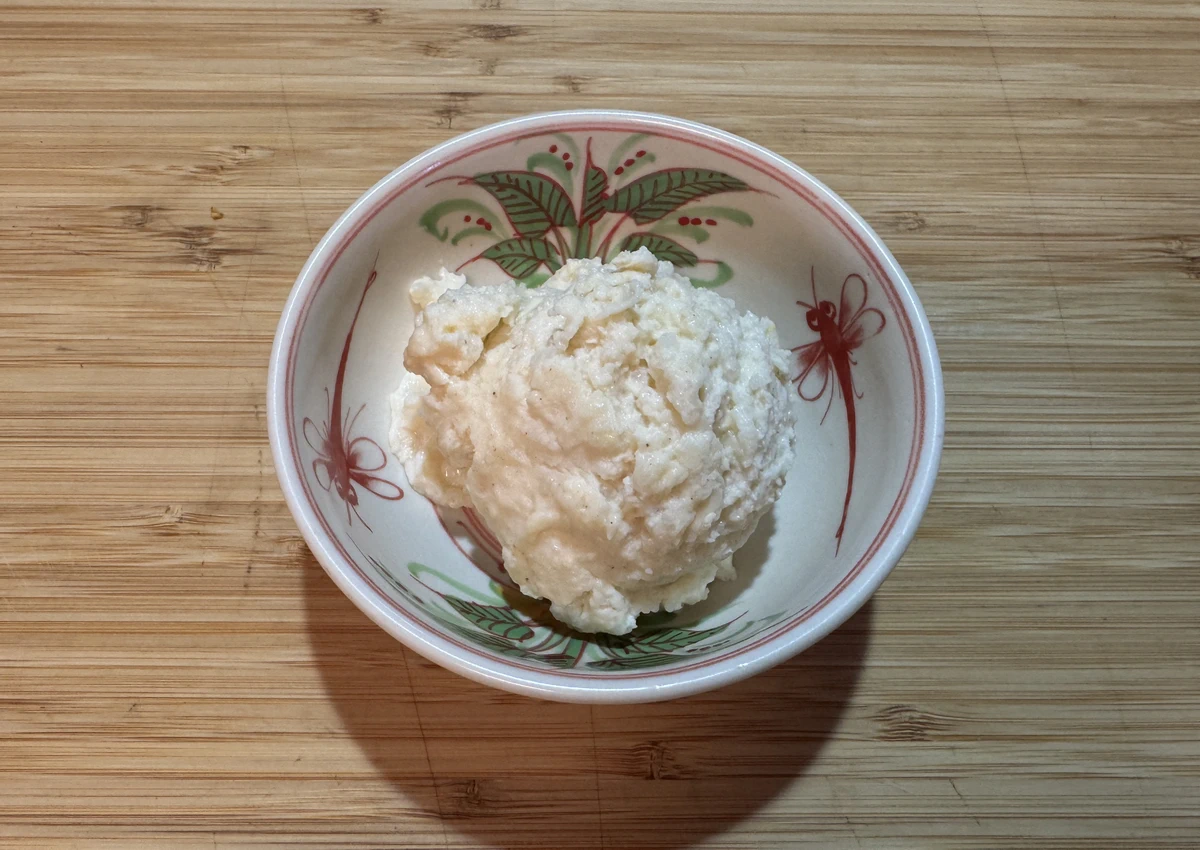
Every good meal deserves a dessert and in searching for Asturian desserts, I came across a rice pudding. I love rice pudding, I had Bomba rice in the cupboard, and it was different from the pudding I usually make. Total win-win! I did not add the cinnamon and sugar topping… My kitchen torch quite literally fell apart and I haven’t bothered to replace it.
It was still a perfect end to the meal!
Rice Pudding
From Asturias.com
Ingredients of rice with Asturian milk
- 200 g round rice, bomba type
- 200 ml water
- 2,5 l of whole milk, if you can find raw cow’s milk better
- 1 Large lemon
- 1 Large cinnamon stick
- 150 g white sugar
- 1 Pinch of generous salt
- Optional: A splash of anise, no more than 1 scoop
Mix 100 g of sugar and 10 g of cinnamon powder, for the final burnt of the presentation
Preparation of Asturian rice with milk
We prepare the lemon, we wash and peel it in a fine way, without leaving much white that then bitter rice.
Heat the two liters of milk over medium heat almost to the boiling point. We lower the temperature and remove from the heat, add the skin of the lemon and finally the cinnamon stick. We leave at rest for about 5 minutes.
In another casserole we put the rice with the water, the pinch of salt and bring it to a boil. Once the rice has sucked all the water we remove. We have added little water and the rice will still be a bit hard, with this process we managed to save almost half an hour. We pass everything to the casserole of the milk and boil the rice at very low temperature, stirring every 10 minutes so that it does not stick to the casserole and the flavors mix well.
The process has an hour or so left. We add the half liter of milk that we have reserved. We continue with the low temperature for another hour, always stirring to get that desired point of creaminess.
When we get the rice to be creamy, keeping in mind that when it gets cold it will get a little fatter, we add the sugar. The sugar is always added at the end so that it does not stick, in addition it will also fatten the cream a bit.
Ready. Let it sit 15 minutes, in each container in which we have served a ration.
When we go to serve rice with milk, we will burn the surface.
We toss a tablespoon of sugar mixed with cinnamon powder on top and we burn with a kitchen torch.
The lemon really made it! I used a microplane and added the zest to the milk. Also, I used a bit of powdered cinnamon – not a cinnamon stick. It was really lush and creamy. The good news is it made a lot – and I really like cold rice pudding!
I am not a huge fan of hard cider, but I did think we needed some for the meal to be a bit authentic – and I needed some for the appetizer.
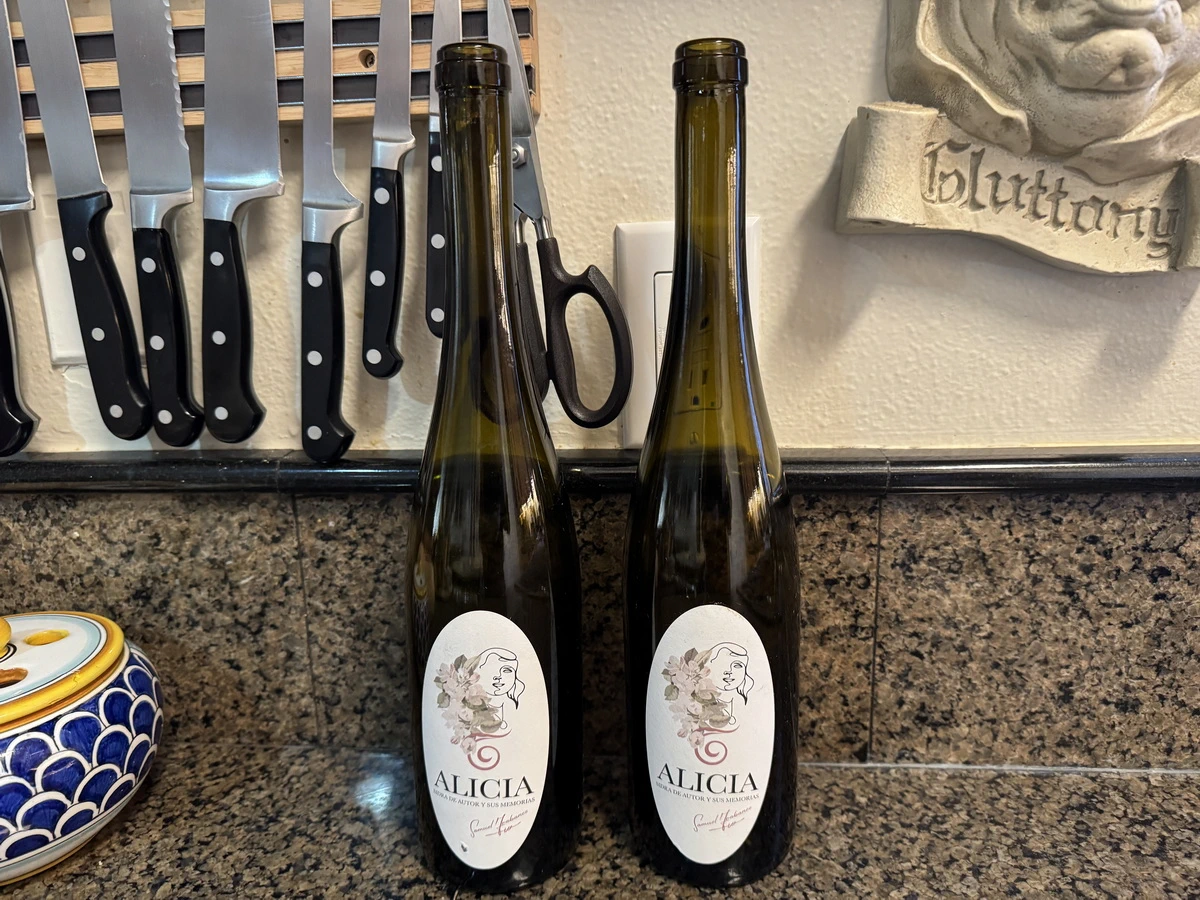
It was okay… Spanish Sidra is not an easy find in The Pacific Northwest and the one I did get was very lightly carbonated – not the style one would find in a typical Sidreria being poured from above to aerate as it flowed into the glass. It had an ABV of about 4% which made it very drinkable, but it’s not going to be a regular part of the home bar.
All-in-all, a very successful meal.
I think we’re heading to North Africa next… Tunisia…
