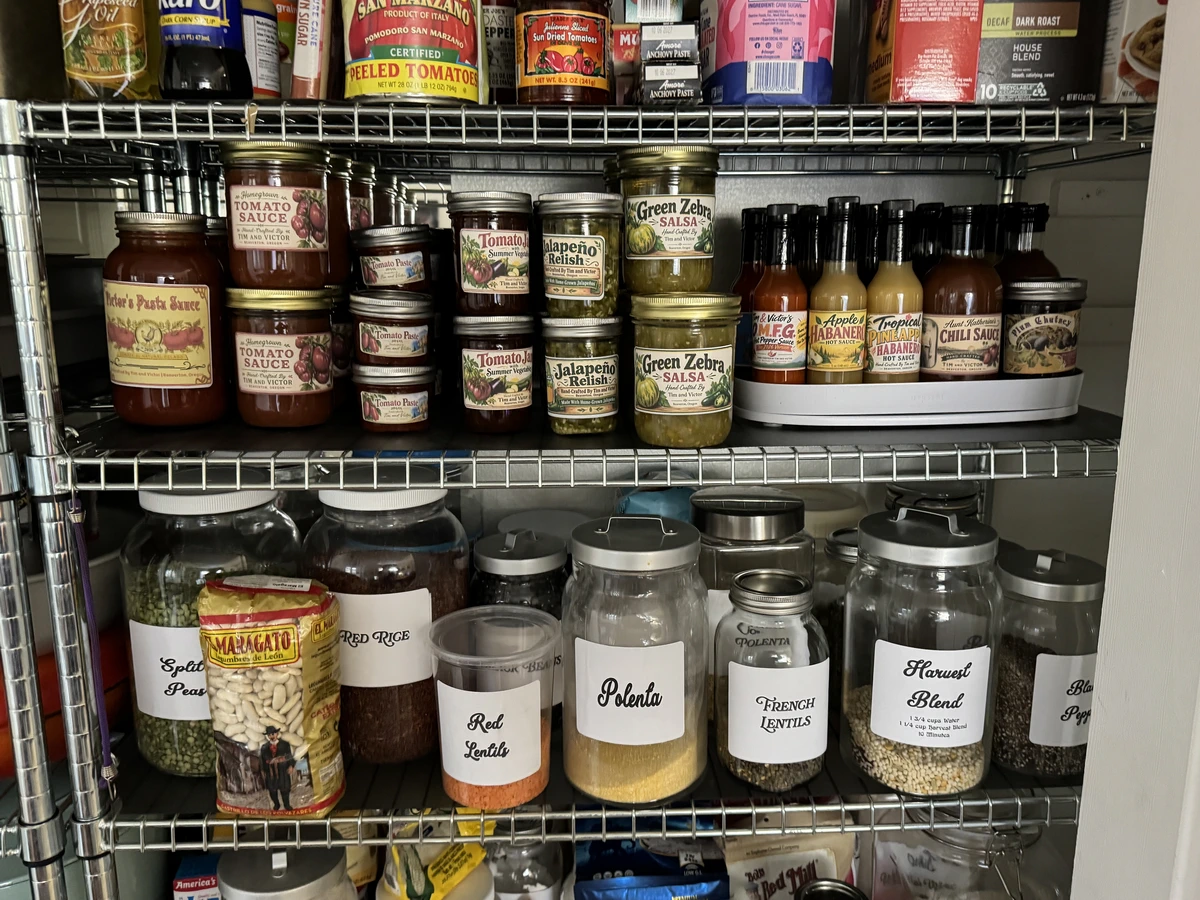

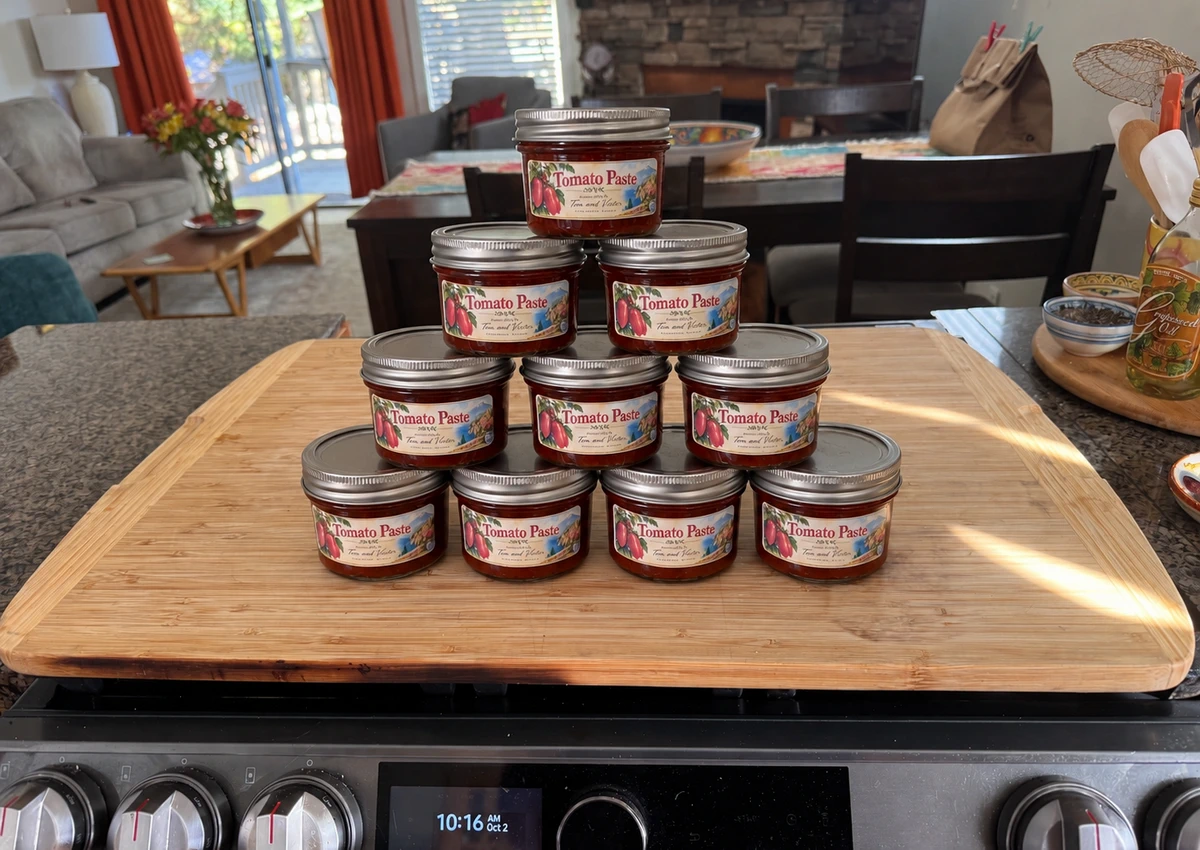
Tomato Paste may be one of culinary life’s great ingredients. Homemade Tomato Paste is one of culinary life’s greatest pleasures.
We first made tomato paste back in September of 2019 when we lived in Pennsylvania. We had a bumper crop of tomatoes that year and decided to give it a go – oven style, as opposed to simmering on a stovetop. We would have preferred to do it like it’s done in Sicily – outdoors on huge tables – but… you know how it goes…
This year, we planted two San Marzano tomato plants and, as the tomatoes ripened, froze them in our new freezer out in the shed. We reached 20 pounds and it was time to get to work. Again, oven-style. I’ve scorched a few too many things in my life to want to do it to 20 pounds of tomatoes we grew ourselves!
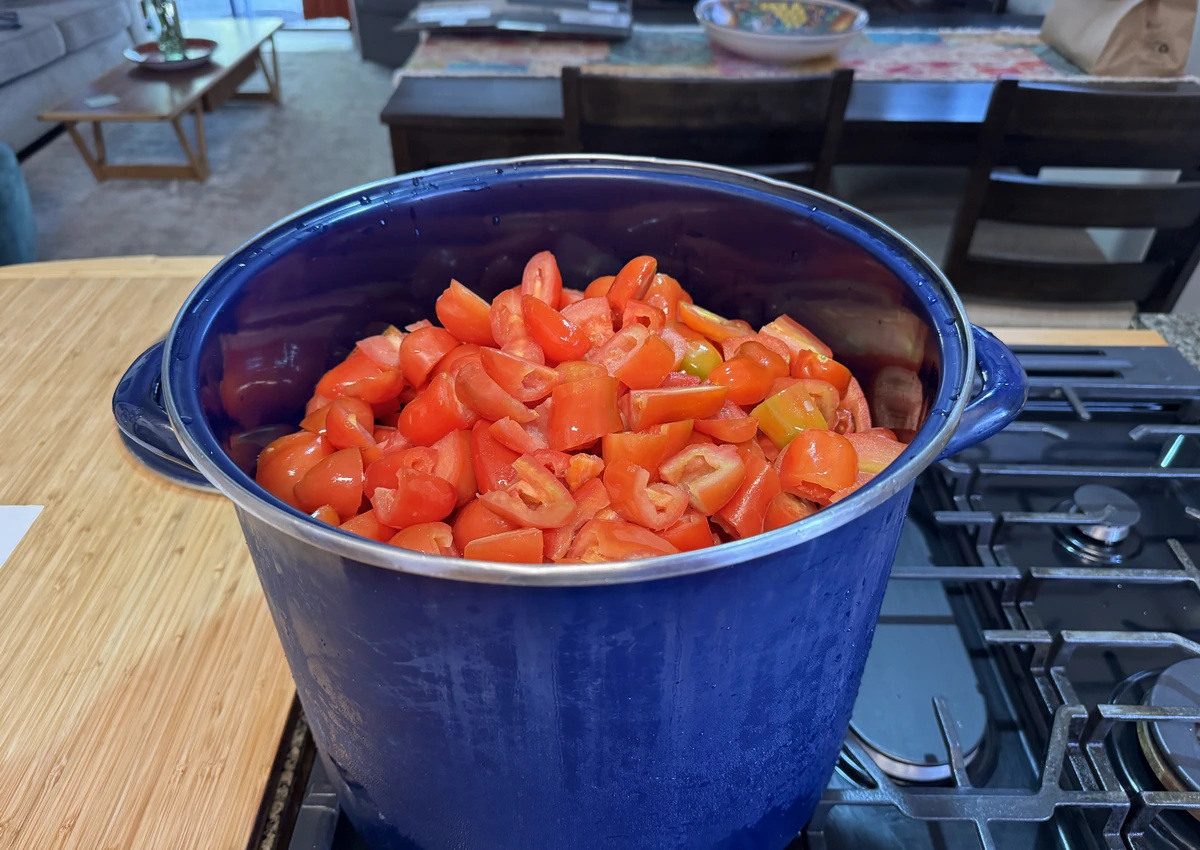
First thing was to break out the big pot and cut them all up.
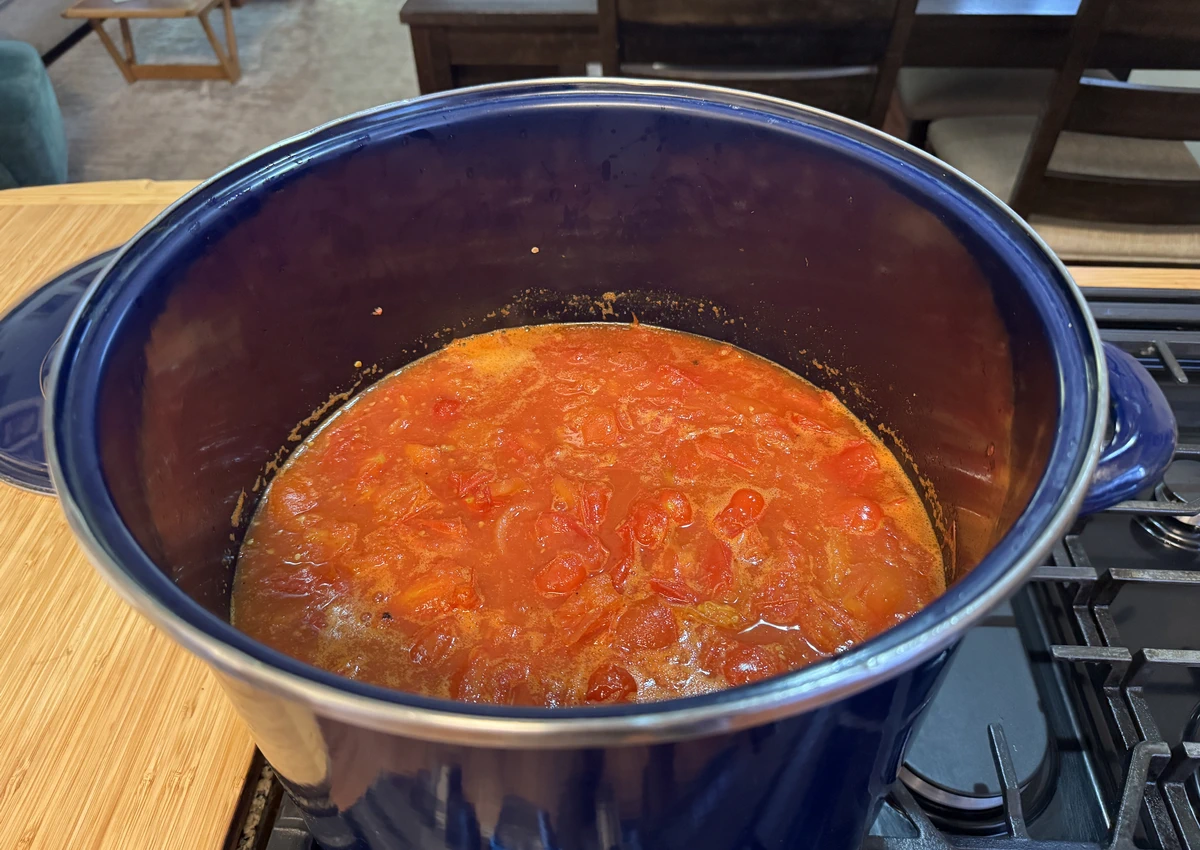
Then it was simmering and reducing. Low heat with a diffuser under the pot. Stirring regularly.
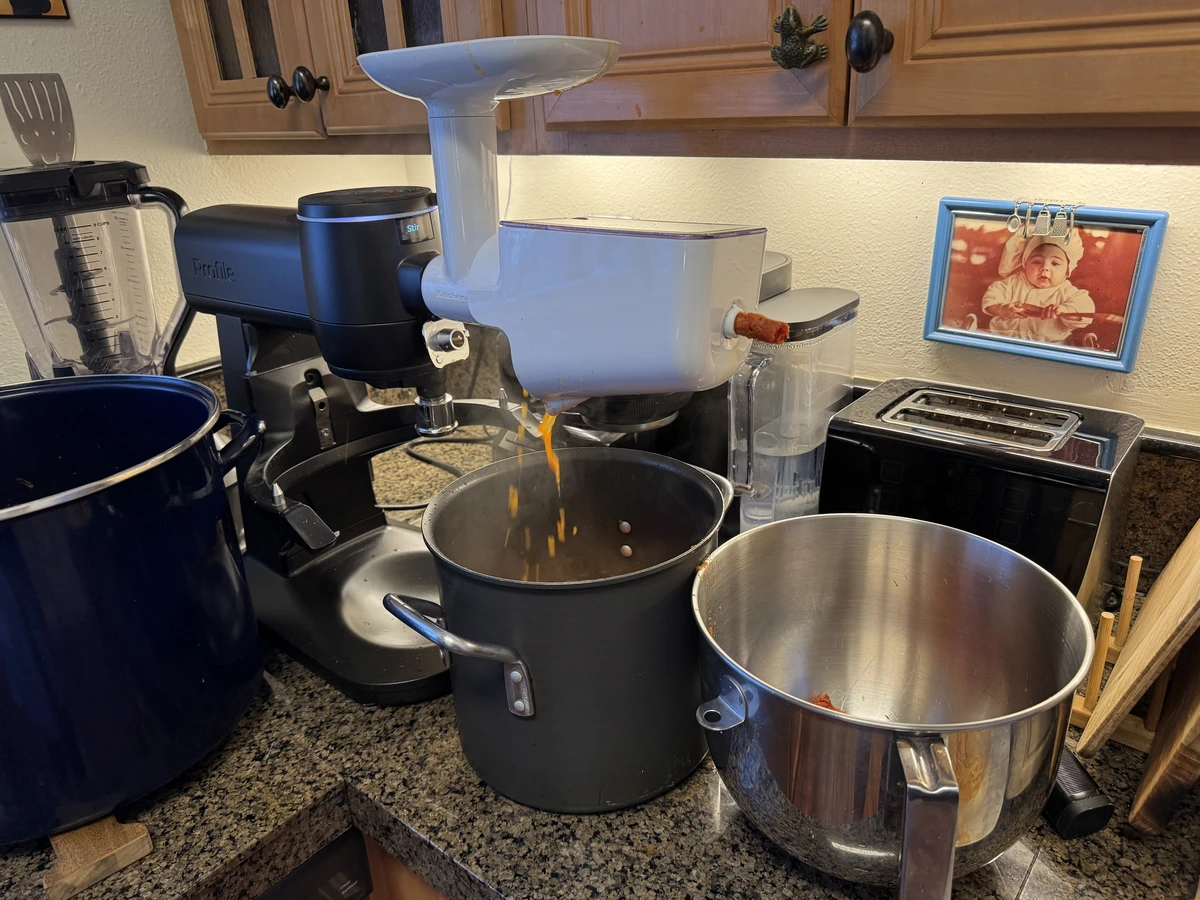
We went out and bought a KitchenAid food mill attachment – a Fruit and Vegetable Strainer – one of the best purchases ever! We actually have a GE mixer. It replaced our almost 40 year old KitchenAid – but all our attachments work with it!
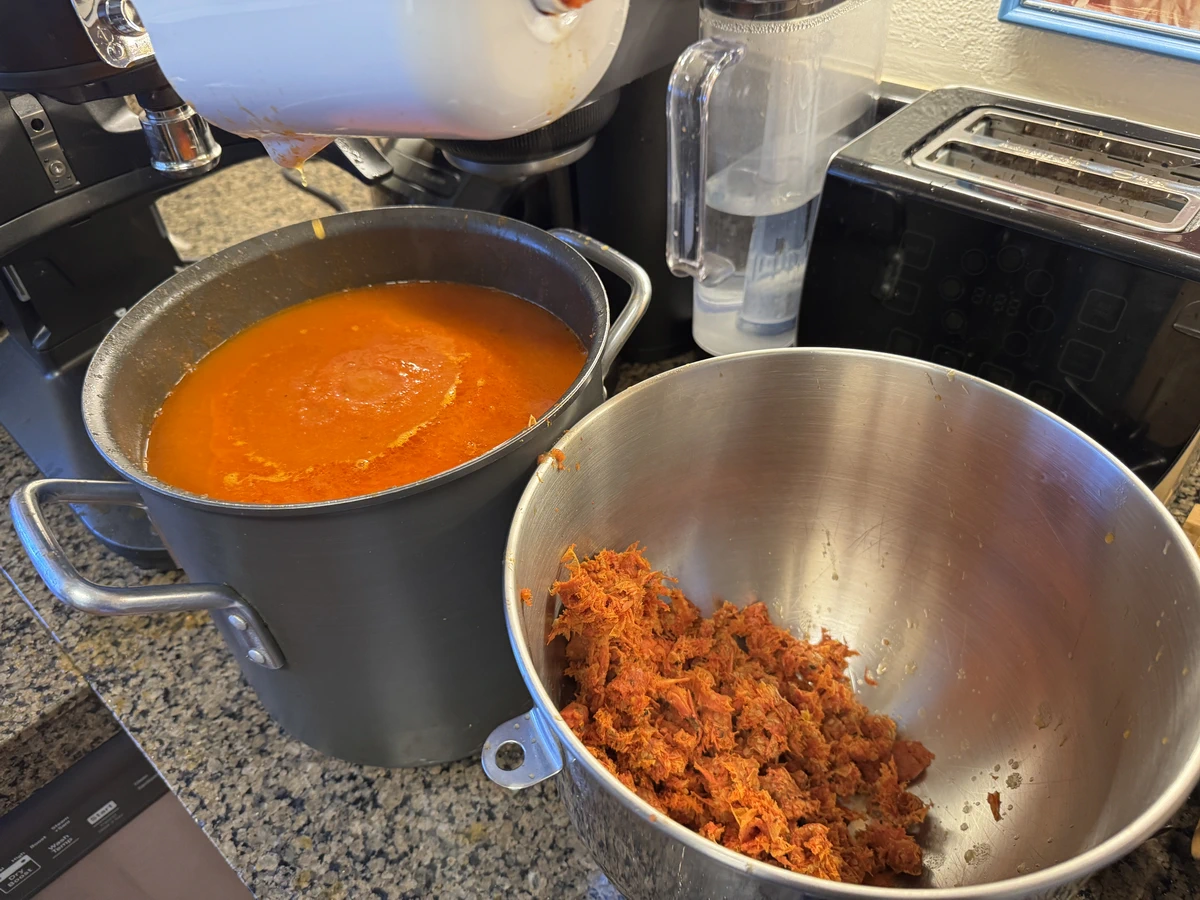
The beauty of this thing is the skins and all automatically come out the end – no stopping and cleaning! We were done in minutes!
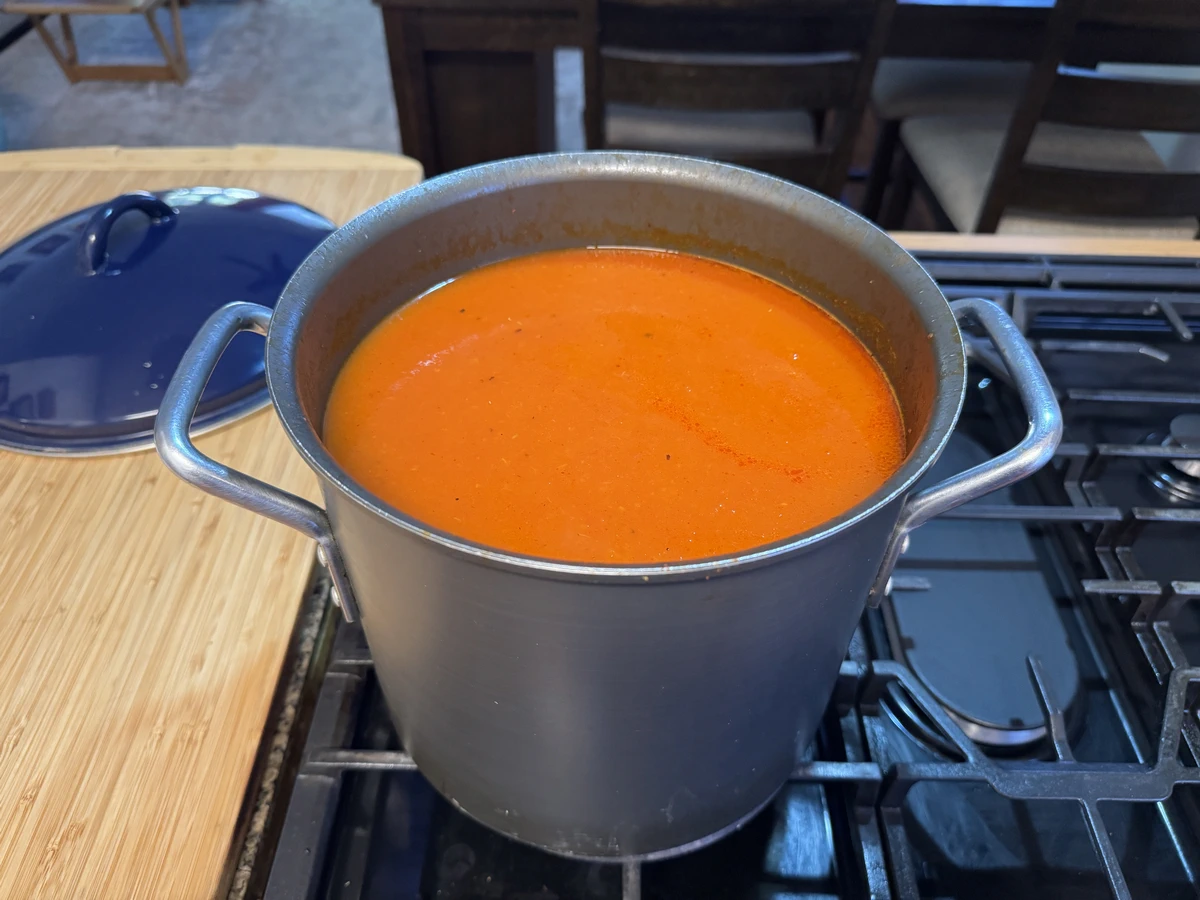
Back onto the stove – diffuser in place – and then more simmering and reducing. And stirring.
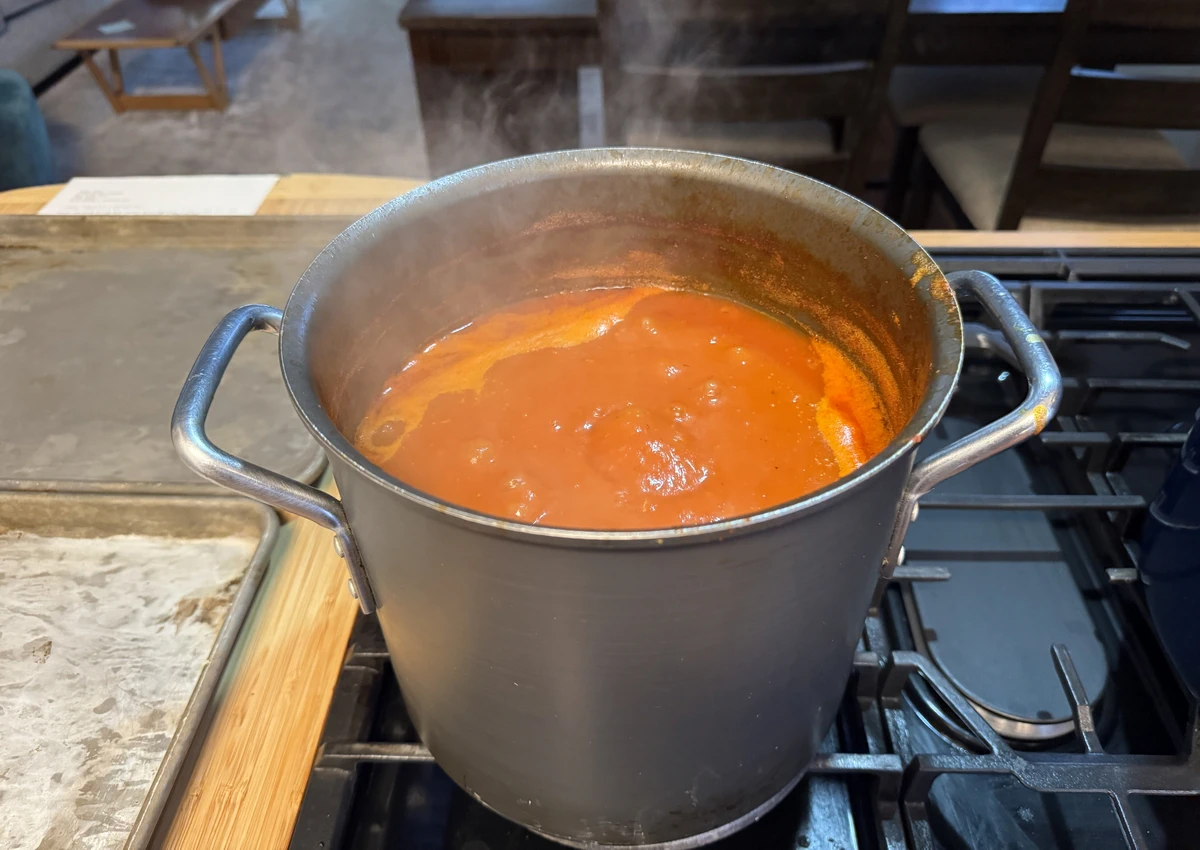
It thickened, and we got it into a 350°F oven on sheet pans.
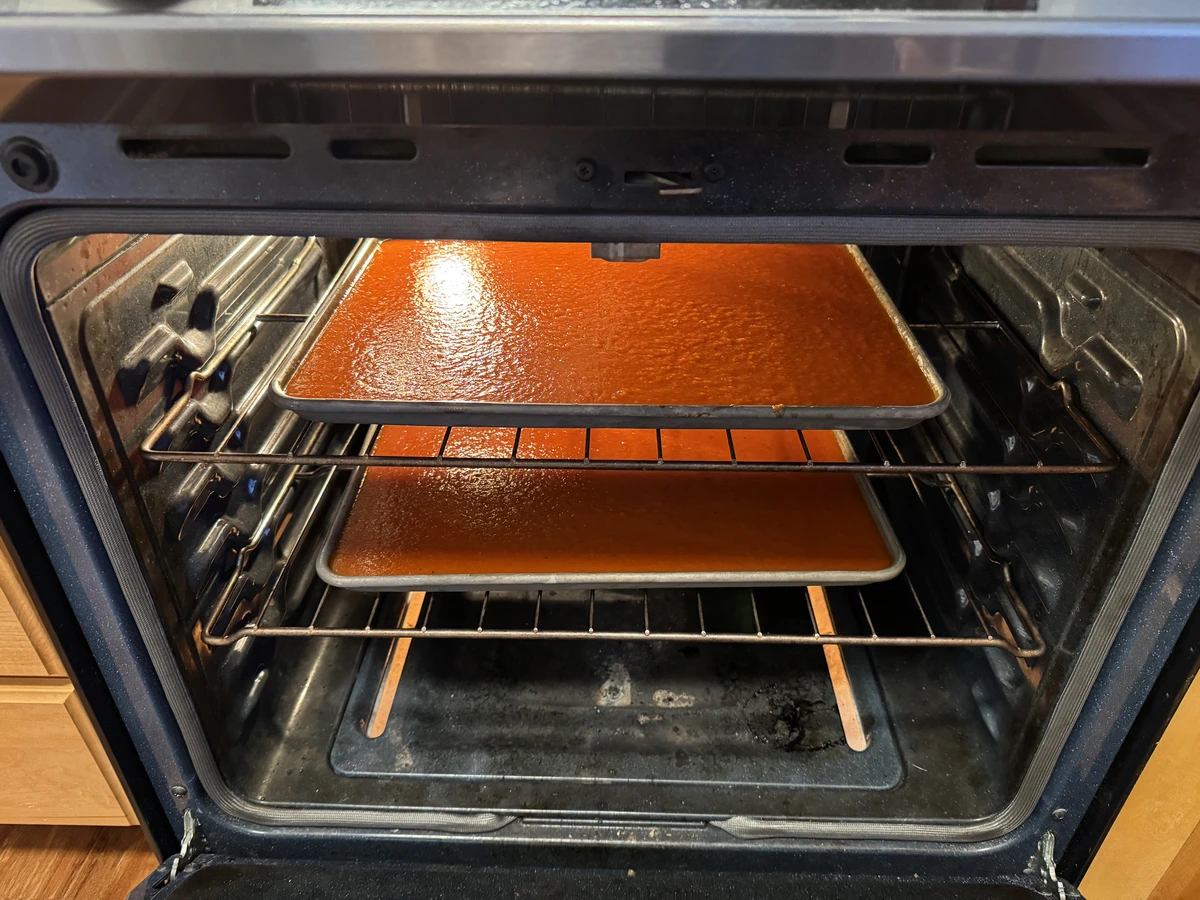
We stirred every 30 minutes and consolidated to one pan.
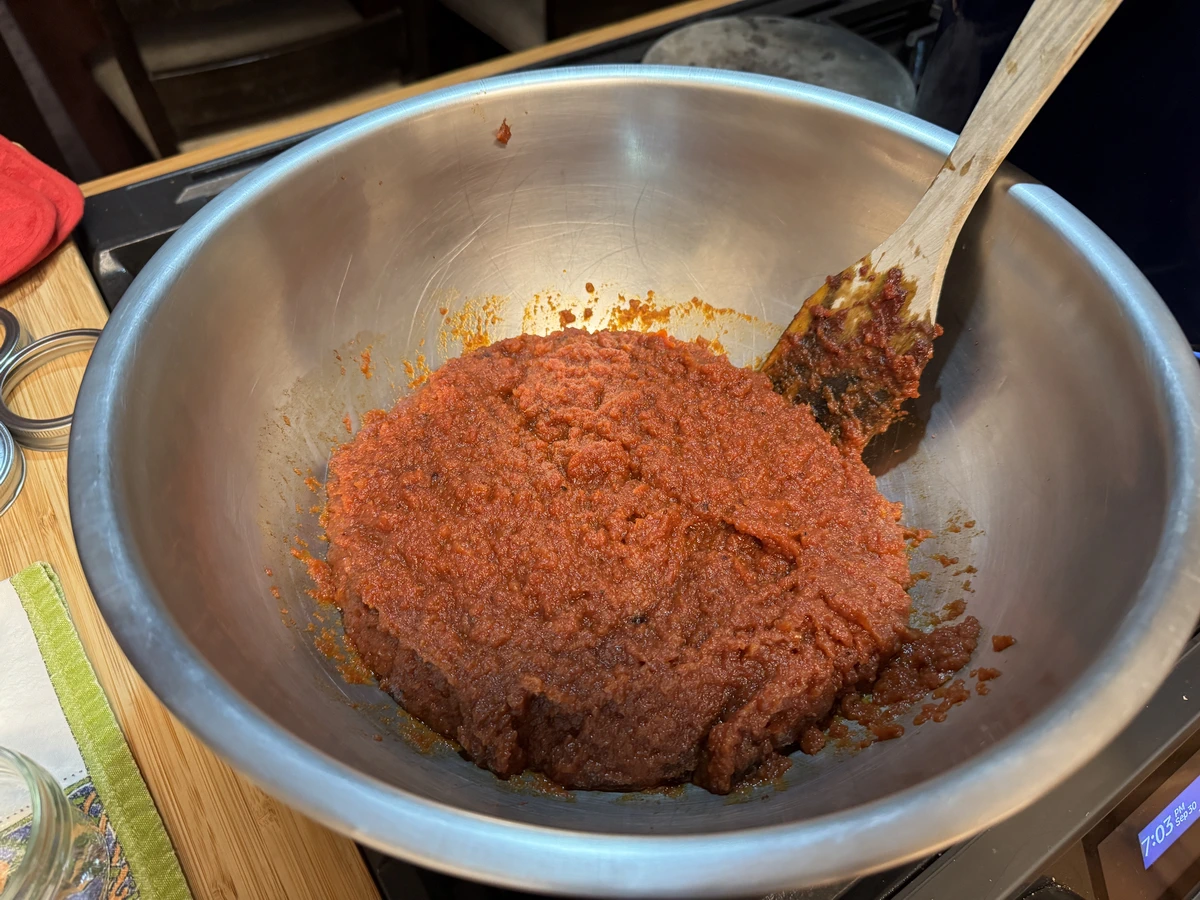
Roughly 320 ounces of tomatoes cooked down to 48 ounces. (That’s 9 kilos to 1.36 kilos for you folks who measure things correctly.)
It took all day to get it done, although most of it was just coming in and stirring now and again. Active Surveillance, not Active Work.
The end result was tomato paste you can spread on a piece of bread and swoon as you bite into it!
Tomato Paste
- 16 kg Roma tomatoes
- 10 g citric acid
- 15 g canning or pickling salt
Wash and rinse half-pint canning jars; keep hot until ready to fill. Prepare lids and ring bands according to manufacturer’s directions.
Rinse tomatoes thoroughly under running water and remove cores; do not peel. Chop tomatoes into ½- to ¾-inch pieces. Place in stockpot; cover and bring tomatoes to a boil. Stir as needed to prevent burning. Reduce heat, remove lid and cook slowly (simmer) for about 1 hour until volume is reduced by half. Stir frequently to prevent sticking and burning.
Press cooked tomatoes through a fine sieve (or food mill with fine blade). (Do not use a blender or food processor, as these will incorporate undesired air into the tomatoes.)
Return sieved tomatoes to stockpot. Stir in citric acid thoroughly. Add and stir in salt. Continue cooking slowly on medium heat, uncovered until thickened.
Place tomato sauce on sheet pans and place into a preheated 350°F (180°C) oven. Scrape and stir every 30 minutes. After about 90 minutes, consolidate to one pan and continue to reduce to desired thickness.
Fill hot paste into clean, hot half-pint jars, leaving ½-inch headspace. Remove air bubbles and adjust headspace if needed. Wipe rims of jars with a dampened, clean paper towel. Apply and adjust prepared canning lids.
Process in a boiling water canner for 45 min under 1000ft. Let cool, undisturbed, 12 to 24 hours and check for seals.
Note: The citric acid in this recipe needs to be added into the sieved tomatoes before they are cooked down into paste (Step 4). Adding it to the jars, as with other canned tomato products, does not allow for adequate distribution of the acid throughout the product. The ratio of citric acid to pounds of tomatoes must be kept consistent.
Developed at The University of Georgia, Athens. Released by Elizabeth L. Andress, Ph.D., Department of Foods and Nutrition, College of Family and Consumer Sciences. May 2015.
A bit time consuming, but totally worth the effort! And it now joins a fun pantry of goodies to get us through the winter months!