

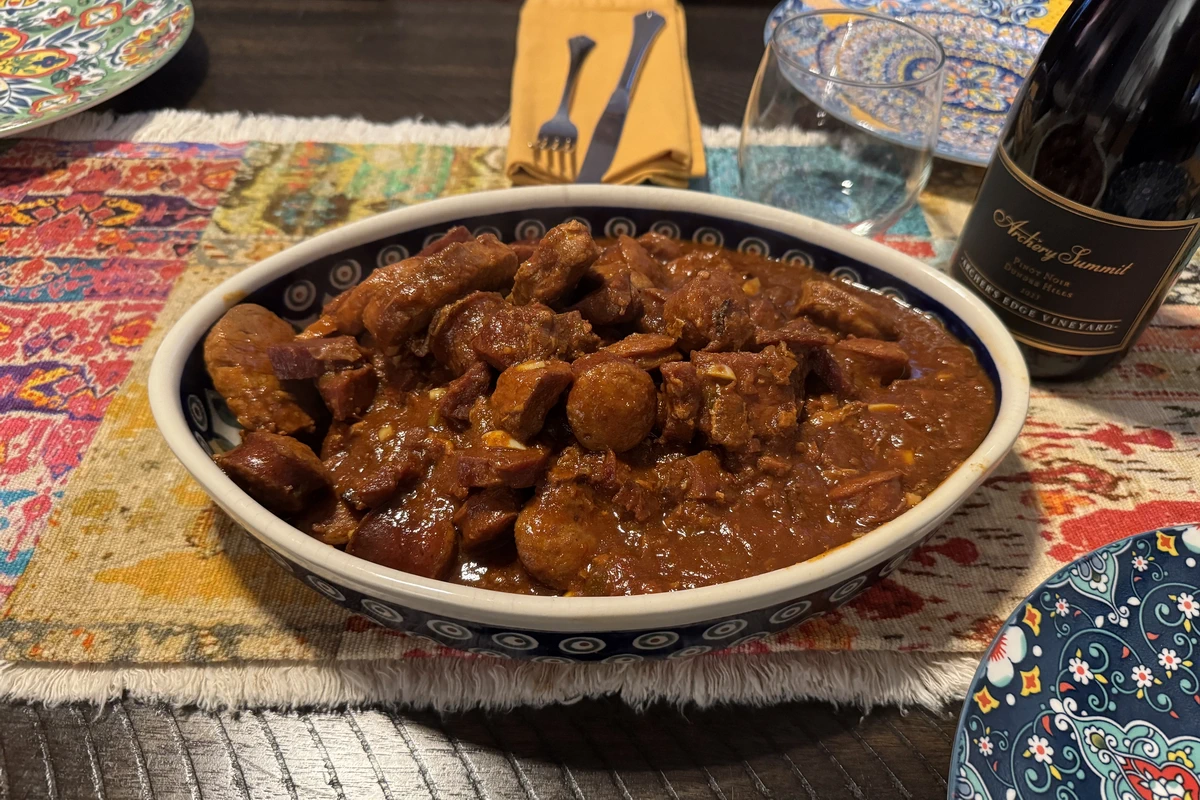
Let’s see… I started this in January of 2025. It’s now September of 2026. I’m getting there…
I have found that I’m much more apt to want to spend the day in the kitchen when it’s cold, wet, and/or rainy outside. That’s kinda how the day started out. Right now it is sunshine and blue skies. A bit windy, but quite nice for the beginning of Fall…
What I didn’t quite think of when coming up with the menu is that I would be making three different yeast doughs! I’m not always the brightest color in the Crayon box, but it was a challenge I was up for – especially since I was making the stew in a slow cooker and not on top of the stove!
Using a slow-cooker may not be exactly traditional, but the dish itself has gone through numerous incarnations over the years… If people in the 19th century – or earlier – had had access to a device they could plug in on their countertop, I’m sure they would have used it.
Tochitură Ardelenească – Transylvanian Pork Stew
From Sweetthought.ca
- 300-400 g pork tenderloin sliced in about 1/2″ thick slices
- 4 pork sausages lightly smoked
- 120 g bacon cut in 4 thick slices
- 4-6 smoked pork ribs cut
- 2-3 tsp paprika ground sweet paprika
- 120 g cherry tomatoes halved
- 60 g scalliions chopped
- 90 ml white wine
- 1+5 garlic cloves coarsely chopped
- 2-3 tbsp vegetable oil
- 1 l cold water
Add sliced pork tenderloin, stir well to coat the tenderloin with fat and paprika. Cook for about 3 minutes.
Add about 1/2 of chopped scallions and all of halved cherry tomatoes. Increase heat to medium (5 out of 10), and cook until tomatoes start softening up, about 8-9 minutes.
Add 1 garlic clove, roughly chopped, and the sausages. Stir and cook for about 5 more minutes, to infuse the sausage with flavors.
Add cut pork ribs, stir and add about 1 litre of water. Make sure that everything is submerged. Partially cover the pot, let it simmer for 1 hour at medium low heat (4 out of 10). Stir every 10-15 minutes of cooking time.
Take the lid off, increase heat slightly (5 out of 10), stir gently, and let simmer for another 1.5 hours. This is the beginning of reduction phase. We want to make it nice and thick.
Add the rest of coarsely chopped garlic (5 cloves), the rest of chopped scallions, stir gently being carefully not to break sausages and ribs. Cook until liquid is reduced and is becoming quite thick (10-15 minutes).
Add white wine and continue cooking at the same heat for the final reduction. When is almost completely dry, and all the liquid is evaporated, the dish is done.
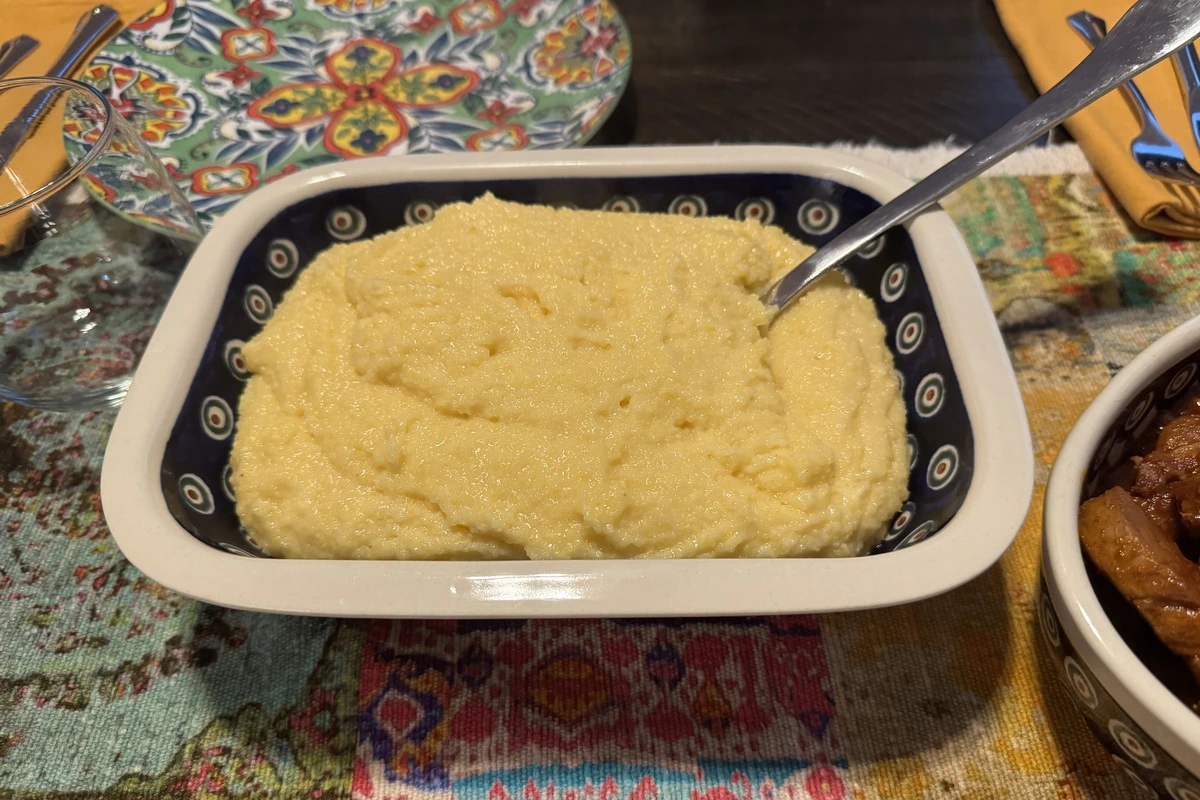
Serve warm over boiled corn meal or polenta, add fried egg on top, sprinkle with freshly chopped dill or parsley.
I saw a few recipes that added a fried egg atop the stew and the concept sounded fantastic – I love a runny egg dripping into another dish. It was just more food than we could possibly eat. We had it over polenta.
We started off the meal with a relatively simple appetizer – and it was a definite hit! I wish I had thought to take a picture of them. They puffed up like balloons and then slowly deflated. The concept is quite simple… roll out a circle of dough, place a bit of filling in the center, fold the edges of the dough over it, press down to seal, and then roll it flat to about the same size as the original. Then fry in a skillet with a bit of oil.
They really were good – and one was enough per person. I cut the recipe in half for four of us, made six, and had 2 left over.
Placinta – Romanian Cheese Pies
From WhereIsMySpoon.co
- 500 g all-purpose flour 1.1 lb/ 4½ cups
- 1 packet instant dry yeast 2 teaspoons,
- 1 teaspoon granulated sugarhttps://whereismyspoon.co/romanian-cheese-pie
- 1 teaspoon fine sea salt
- 250 ml lukewarm water 1 cup
- 350 g feta cheese preferably sheep’s feta, 12.5 oz
- 3 green onions
- 1 small bunch dill
- fine sea salt and black pepper
- 2-3 tablespoons oil for frying
Yeast dough: Make the dough: In a large bowl, mix flour, yeast, sugar, and salt. Slowly start adding the lukewarm water, mixing with a spoon until the flour is incorporated. Knead the dough for about 10 minutes or until it stops sticking too much to the walls of the bowl, flouring your hands from time to time if necessary.
Let dough rise: Cover the bowl with a kitchen cloth and let rise in a warm place for about 1 hour or until doubled in size.
Stand mixer: Alternatively, you can prepare the yeast dough in a food processor using the appropriate kneading accessories. I knead this kind of dough for about 3-4 minutes in the stand mixer.
Filling: Make cheese filling: Crumble the feta cheese finely, but don’t turn it into a paste; it is enough if you use a fork to crumble it. Add the finely chopped green onions and dill. Mix well and adjust the taste with salt and pepper.
Shape the pies: Roll yeast dough: Knead the dough very briefly to bring it into shape again. Divide it into 10 parts and form 10 balls. Roll each ball into a thin circle. I did not require extra flour for rolling but sprinkle the working surface and the rolling pin very lightly with flour if the dough starts to stick.
Fill Romanian placinte: Place some filling in the middle of the circle and form a pocket by bringing together all the sides of the circle and pressing lightly to seal the pocket. Roll the pocket again to make it flat. (See pictures above)
Rest pies: Place the pies on a piece of baking paper and let rest for 10 minutes.
Fry: Cook placinte: Heat a large nonstick pan. Brush it or spray it with a little oil and fry the pies for 2-3 minutes on each side. You will have to work in two or three batches, adding a bit more oil between the batches. 2-3 tablespoons oil
Serve: Keep the finished pies warm in the lightly heated oven. Serve immediately.
A good stew deserves a good bread and in my search for my A-Z recipes, I always look for a bread to bake. I think of bread as pretty much the most basic of foods – and it’s amazing how many different ways there are to put flour, water, salt, and yest together!
This is no exception!
I was tempted to use a coarse cornmeal but opted for a finer grind – probably a good call. I think a coarse grind could have resulted in a drier, grittier loaf. This one worked well! It make two loaves – one went right into the freezer after cooling.
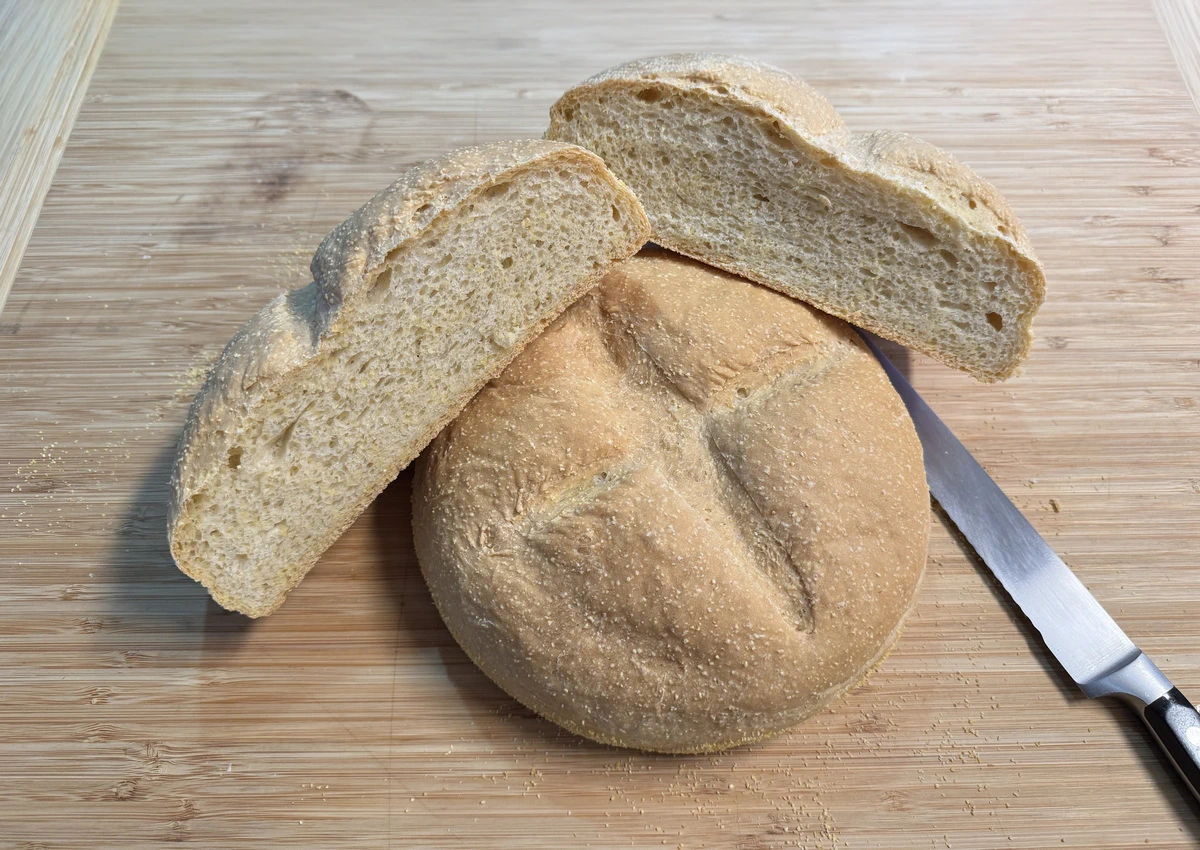
Romanian Tara Paine
From TheSpruceEats.com
- 11 g active dry yeast
- 555 mL lukewarm water, divided
- 13 g sugar
- 42 g shortening, melted
- 12 g salt
- 570–600 g all-purpose flour
- 150 g yellow cornmeal
In a large bowl or stand mixer, combine yeast, 1/3 cup lukewarm water, and sugar. Let stand for 5 minutes. Add 2 cups lukewarm water, melted shortening, salt, and 2 cups all-purpose flour. Beat with a wooden spoon or paddle attachment just until dry ingredients are moist.
In a separate bowl, mix 2 1/2 cups all-purpose flour with cornmeal. Add 1 cup at a time to the yeast mixture, beating well after each addition. If dough appears too sticky, add 1/2 cup flour. Switch to the dough hook and knead until elastic, about 6 minutes (or knead by hand). Form dough into a ball and place in a greased bowl, cover with greased plastic wrap and let rise in a warm place about 1 hour or until doubled.
Grease 2 (9-inch-round pans) or 1 large round pan and sprinkle lightly with cornmeal. Punch down dough and turn out onto a floured surface. Knead dough a few turns and divide in half if making 2 loaves or leave whole and shape into a round. Place in prepared pan(s). Cover with greased plastic wrap and let rise in a warm place until doubled, about 1 hour.
Heat oven to 350 F. When dough has risen for the second time, slash an X shape into the top, if desired, and sprinkle with cornmeal. Place in oven and bake 50 to 55 minutes or until toothpick or skewer tests clean and instant-read thermometer registers 190 F. Cool on a wire rack for 10 minutes and then tip out of pan onto rack and turn bread(s) right-side up. Let cool completely before cutting.
It’s going to make some great toast!
And what’s a meal without dessert?!?
The third and final dough of the day was cookies! My favorite dessert is usually the one I’m eating at the moment – but cookies in all their glorious variations do tend to rise to the top…
This particular recipe caught my eye because of one ingredient listed – the jar of chocolate spread. We had a jar of Loacker Crispy Hazelnut Cream Spread – Hazelnut Spread with Wafer Crispies that had been sitting in the cupboard for a year – several months past its “Best By” date. It was time to use it! It’s much like a Nutella with little cookie crunchies. It worked!
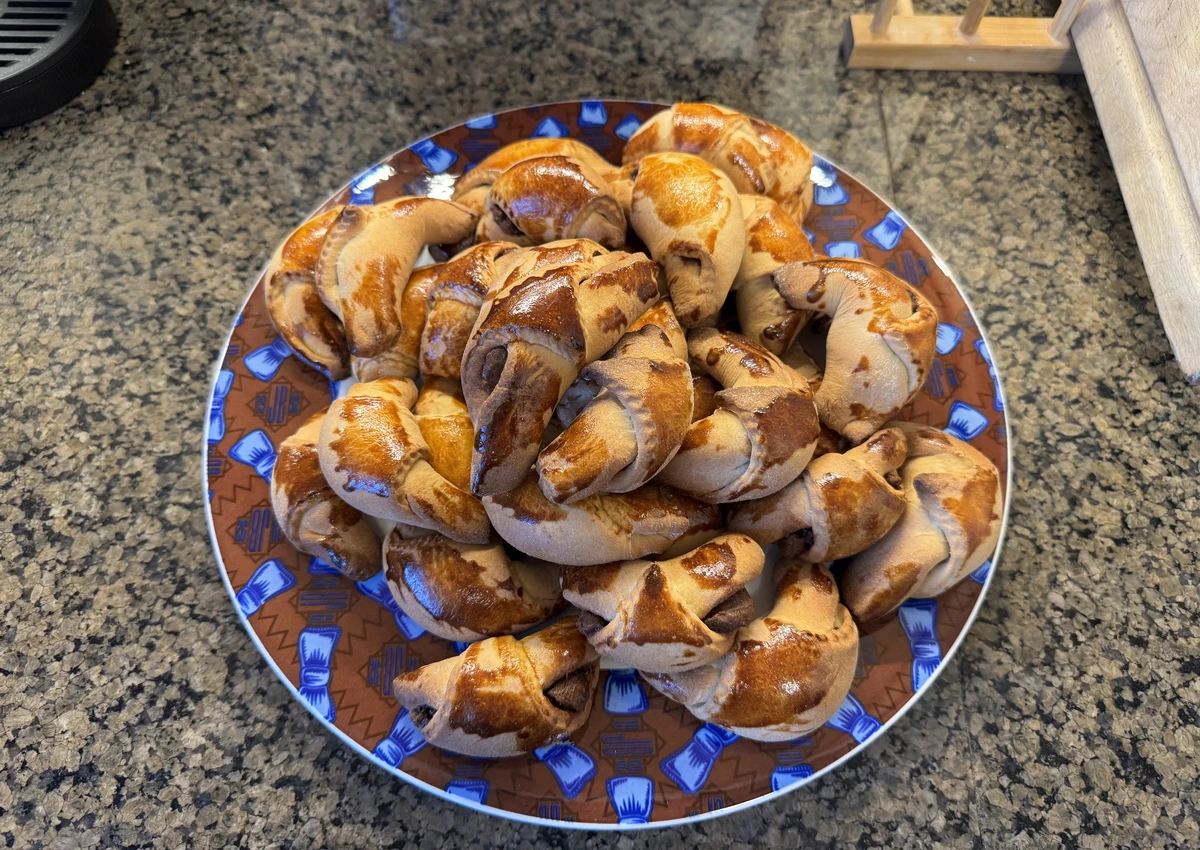
Cornuri cu Ciocolata – Romanian Chocolate Filled Crescent Rolls
- 120 ml warm milk
- 350-400 gr flour
- 100 gr sugar
- 7 gr instant yeast
- 75 gr unsalted butter
- 2 eggs
- 1 egg yolk for brushing the pastry
- 1 pinch of salt
- vegetable oil for greasing
- 1 jar chocolate spread
Separate 4 tbsp of flour and 2 tbsp of sugar. Warm the milk (not hot) and mix with yeast, reserved flour, and sugar. Cover and rest for 20 minutes until frothy.
Melt the butter and let it cool. Add to the yeast mixture along with the remaining sugar, eggs, and salt.
Gradually add the flour, kneading for about 15 minutes, until the dough becomes soft and elastic.
Grease a bowl with oil, place the dough inside, brush lightly with oil, cover, and leave to rise for 1 hour.
Divide the dough into smaller portions, roll each into a thin round, and cut into triangles (like pizza slices).
Place a spoonful of chocolate spread at the base of each triangle, then roll into a crescent shape, tucking in the ends.
Preheat the oven to 180°C. Place crescents on a baking tray lined with parchment, brush with beaten egg yolk, and bake for 20 minutes, until golden brown.
Serve warm with gooey chocolate inside, or cooled with coffee or milk.
My only change to the recipe was adding some vanilla to the dough. Vanilla makes everything better!
Romania was definitely a success! There were some very distinct flavors that really came together well. The cheese pie was a surprise – the feta, onion, and dill really played off one another for a perfect bite. The pork stew was rich – very rich. It was the type of meal that would keep a person warm during a cold night or give them the strength to do some serious labor. Being a retired old man with central heating, a small portion without the egg was more than enough!
And cookies… I don’t think I’ve ever met a cookie I didn’t like…..
Next, we’re off to Spain! We have friends living in the Asturias region of northwestern Spain, so it’s going to be different than paella or tapas…
